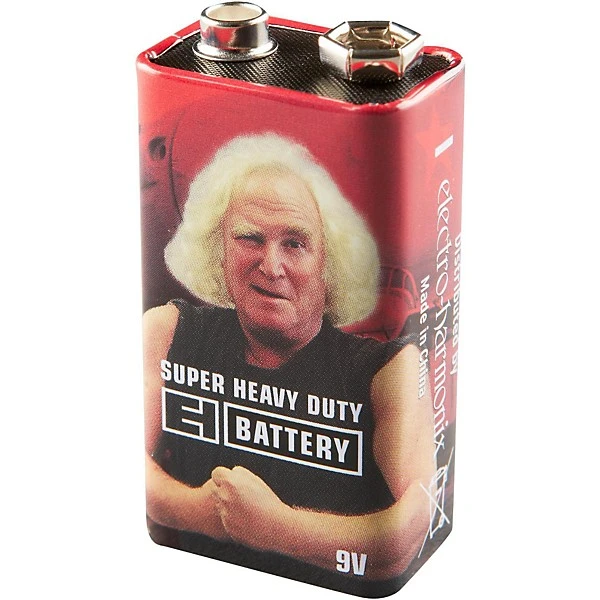
What it does
Supports low-load portable circuits, but its relatively small cell structure and internal resistance make sustained motor/servo use poor for many common 9 V batteries. Voltage falls under load and as charge is consumed.
Useful specifications
- Nominal package class
- 9 V
- Chemistry/capacity/rechargeability
- Verify actual battery
How it works
Electrochemical oxidation/reduction separates charge between electrodes; external wiring permits electrons to flow while ionic processes close the internal circuit. Multiple internal cells or another chemistry produce the package voltage; exact chemistry is not established here.
Recognize the part
Rectangular body with two unequal snap terminals together on one end. Read chemistry and rechargeable labeling.
Also called: 9v battery with dc, 9V DC battery
How to use it
Check polarity and loaded voltage, use the appropriate clip and regulator/device input, and disconnect after use. Choose the actual battery chemistry for the load and never attempt charging a primary battery.
Know before using
Limits
- Voltage sag and finite capacity; capacity depends strongly on load/chemistry.
Common mistakes
- Assuming fresh open-circuit voltage guarantees motor current.
- Charging a battery not labeled rechargeable.
Care and safety
- Cover loose snap terminals to prevent shorts against metal.
Related owned hardware
Read the conditions before connecting parts. A relationship can involve a driver, controller or a redesigned circuit.
power connection
- The snap lead connects the 9 V battery to a separately verified polarity-correct input.
- This battery matches the snap connector form.
Connection conditions
- Use reverse-polarity/short-circuit care; a rectangular 9 V battery is a poor high-current servo/panel source.
input power
- 9 V can feed a documented Uno VIN/barrel route if connector/polarity and regulator load are appropriate.
Connection conditions
- Never feed 9 V into 5 V or GPIO; regulator heating depends on load.
Inventory record and image evidence
Quantity: 2 · quantity confidence: high
Known countable purchase/BOM contributions. Each source line is a total; do not multiply by container count or add photo observations.
Ownership: source-backed club holding. Identity confidence: high.
Identity follows exact kit sheet/BOM; expected quantity is not a physical stocktake.
V1 establishes the catalog identity. Technical references explain the named device or component class; unverified carrier-specific ratings and pinouts are not asserted.
Source holdings
Parent kits
Original V3 image confidence: 90% · high. Component crop tied to an owned kit and its source mapping; selected by form rather than filename alone.
Original V3 image source: ELEGOO Mega reference (owned kit reference). Images describe identity and form; they do not establish quantity.
Displayed image source: User-supplied 9 V battery reference photograph.
User-selected 9 V battery reference. Pictured branding and heavy-duty text do not establish the owned brand, chemistry, capacity or charge state.
User-supplied reference image; original rights retained.