220 Ω resistor
The bare junction does not limit current; each driven channel needs a calculated series resistor.
- 220 Ω is one owned candidate; use a larger value if required by voltage/LED/GPIO limits.
Discrete Components
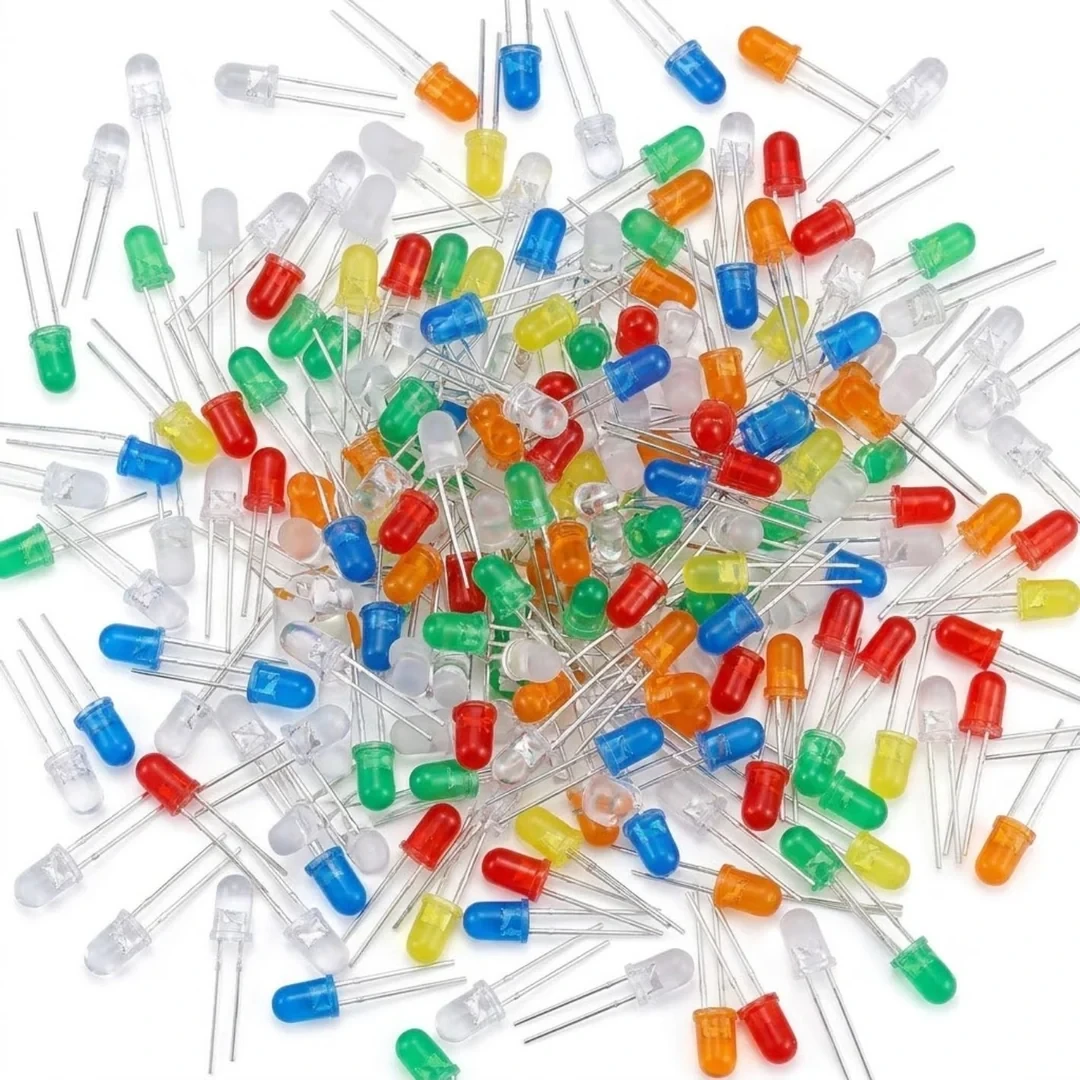
An assortment of discrete indicator LEDs provides several visible colors for status and display experiments.
Two-terminal emitters
Choose individual LEDs by emission color and measured polarity. Different colors need different resistor calculations because their forward drops are not equal.
Semiconductor junctions emit light under forward current; wavelength follows the die material and any phosphor.
Loose two-lead lens packages of different tints; transparent lenses can emit several different colors.
Also called: pieces of LED
Test one LED at a time with diode test or a low-current resistor circuit. Keep values sorted and calculate the resistor for the selected die.
The bare junction does not limit current; each driven channel needs a calculated series resistor.
Read the conditions before connecting parts. A relationship can involve a driver, controller or a redesigned circuit.
visual output
current limiting
polarity verification
support hardware
Quantity: 25 · quantity confidence: high
Known countable purchase/BOM contributions. Each source line is a total; do not multiply by container count or add photo observations.
Ownership: source-backed club holding. Identity confidence: probable.
Supported by source contribution; unresolved variant and source details remain on its holding.
V1 establishes the catalog identity. Technical references explain the named device or component class; unverified carrier-specific ratings and pinouts are not asserted.
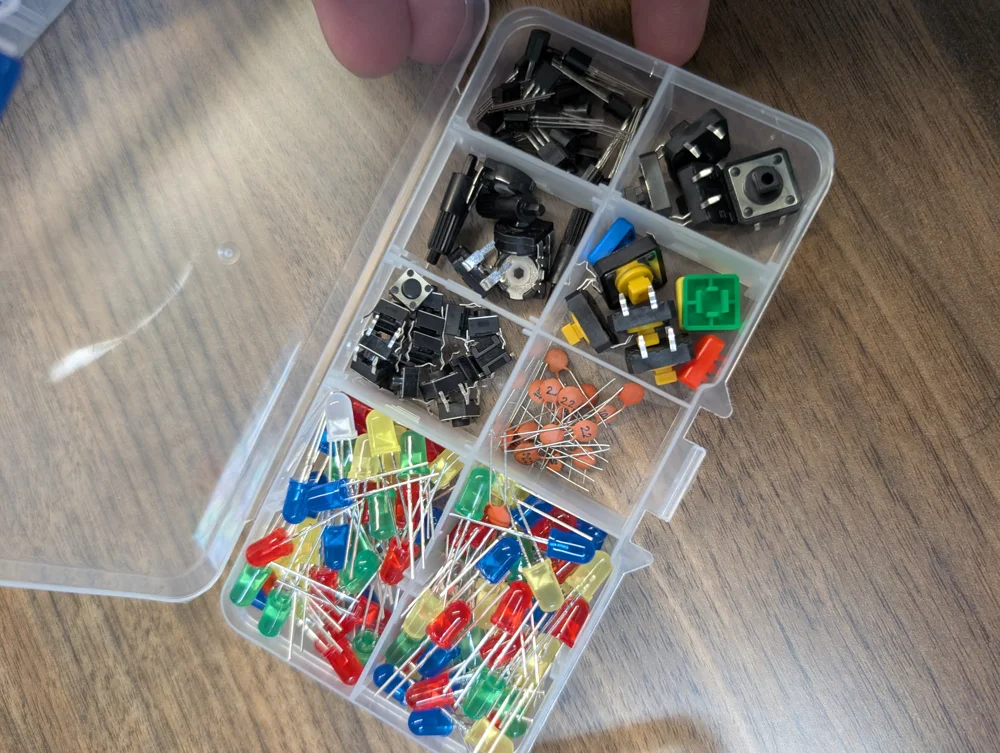
Original V3 image confidence: 95% · high. Tight crop of the actual club item; model details not visible remain unasserted.
Original V3 image source: Engineering Club actual item (physical photo). Images describe identity and form; they do not establish quantity.
Displayed image source: User-supplied Assorted LEDs reference photograph.
Mixed LED assortment reference; pictured colors, emission colors and item counts do not establish assortment contents or quantities.
User-supplied reference image; original rights retained.