advanced
Pi 5 sensor-data analysis service
Core electronics availableReceive ESP32 telemetry on Pi 5 and store validated data with stale-reading indicators.
Power
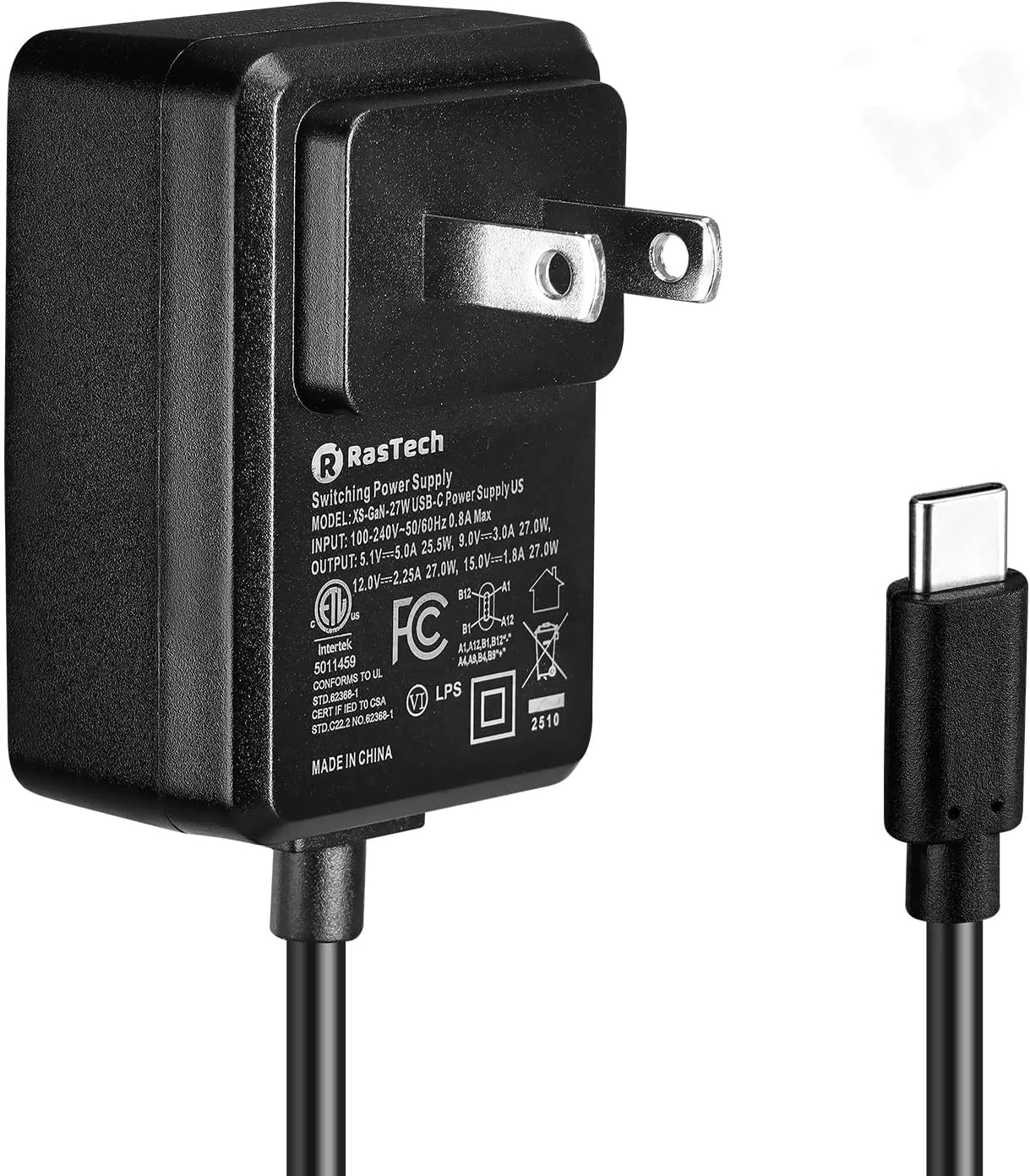
The owned Pi 5 supply provides USB-C power for the board, with exact manufacturer/profile details requiring label verification.
USB-C DC supply; PD capability where documented
Supplies the computer and its peripheral load while holding the required rail near nominal voltage. Current capability and cable resistance affect undervoltage behavior; a high watt number alone does not establish the required 5 V current profile.
Internal conversion regulates output and the cable carries it to the board. USB-C Power Delivery capability, where present, negotiates supported voltage/current profiles; plug shape alone does not establish them.
Power adapter and cable intended for Pi 5; check the label and USB-C connector before assuming the official supply specification. Read output-profile and manufacturer labels; do not rename the owned third-party Pi 5 supply as Raspberry Pi’s official adapter.
Confirm this supply offers the board-appropriate 5 V current profile and supported cable. Pi 5’s full-power reference recommendation is a 5 V/5 A-class USB-C supply; a 3 A path may impose peripheral restrictions. Verify the actual owned adapter before quoting official-supply values. Keep plugs seated, avoid high-resistance extensions and diagnose undervoltage under actual load. Shut down the OS before disconnecting.
advanced
Receive ESP32 telemetry on Pi 5 and store validated data with stale-reading indicators.
Read the conditions before connecting parts. A relationship can involve a driver, controller or a redesigned circuit.
power
Raspberry Pi 5 power supply: 1 individual units · received
View wishlist →Quantity: 1 · quantity confidence: confirmed
Known countable purchase/BOM contributions. Each source line is a total; do not multiply by container count or add photo observations.
Ownership: source-backed club holding. Identity confidence: confirmed.
Supply ownership was confirmed with the received procurement batch; its actual output rating is still unverified.
The inventory identity is preserved; official Pi 5 supply specifications are requirements/reference guidance rather than a claim about the owned third-party unit.
Image confidence: 88% · high. Same RasTech purchase ASIN B0CLV6WB4L; image is a product reference, not certification of the actual supply output.
Image source: https://www.amazon.com/dp/B0CLV6WB4L (seller reference). Images describe identity and form; they do not establish quantity.