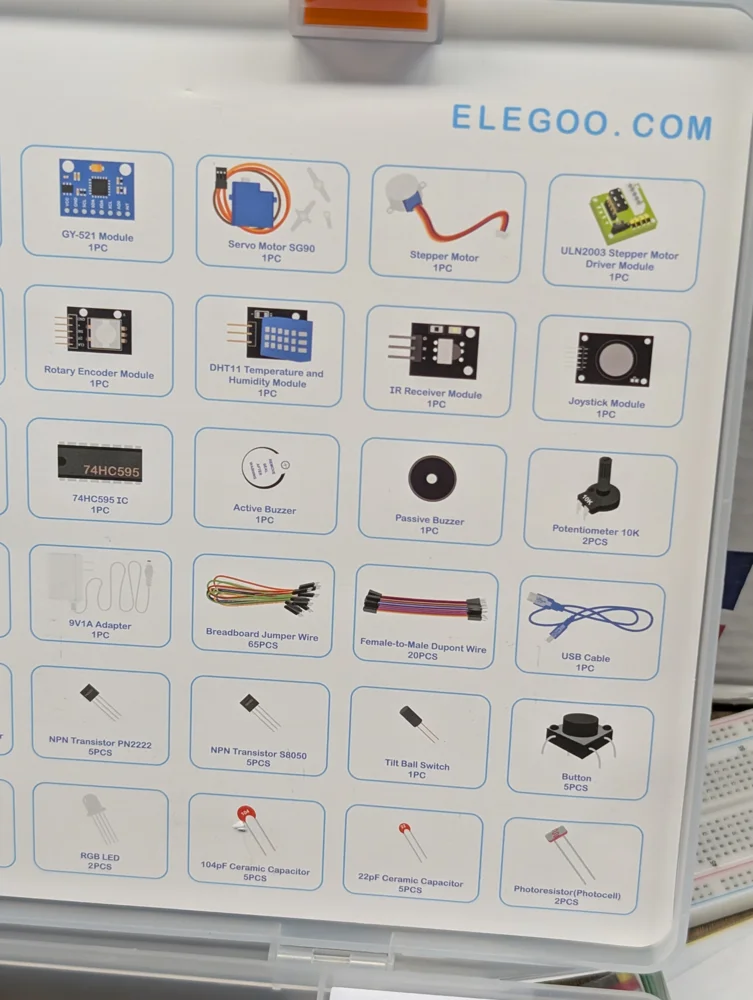
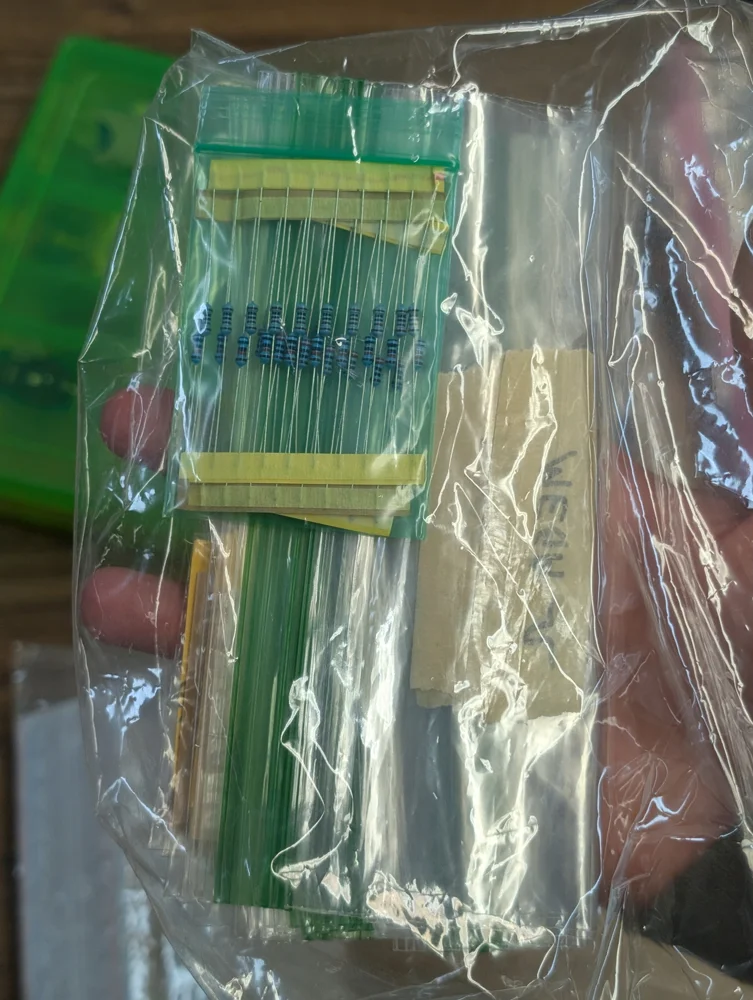
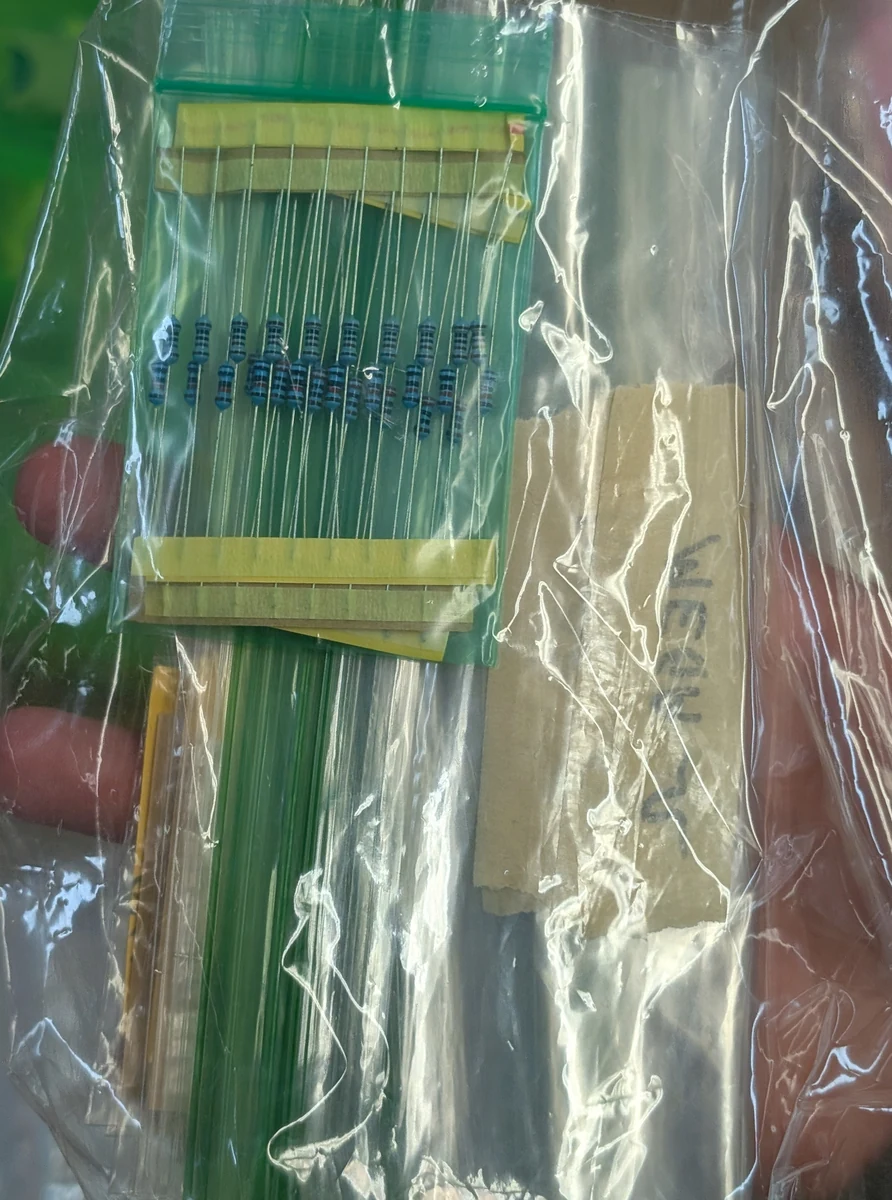
divider selection
Photoresistor, bare part
- Different fixed values let students select sensitivity for the measured LDR resistance range.
Connection conditions
- Measure selected values; the assortment count does not identify one loose resistor.
Discrete Components
A mixed resistance assortment supplies values for current limiting, biasing and divider experiments.
Two-terminal passive
Lets a circuit designer select a resistance suited to the intended current or divider ratio; the assortment label does not guarantee the value of an unsorted loose part.
Each resistor converts electrical energy into heat; voltage/current follow its resistance, and power must stay below its actual rating.
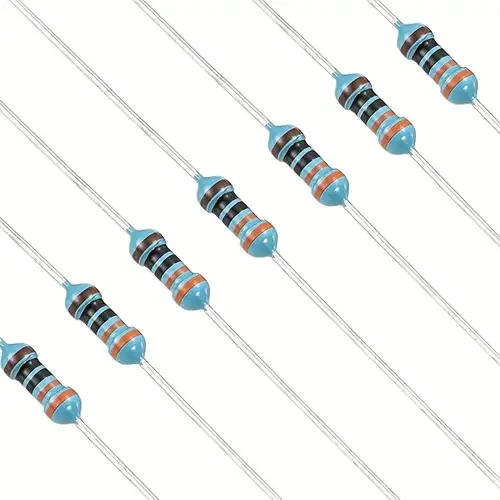
Groups of axial two-lead resistors; use labeled storage and measure uncertain parts out of circuit.
Also called: resistor assortment 120pcs
Select by nominal ohms, then check watts and tolerance. Keep already sorted values separate after use.
Read the conditions before connecting parts. A relationship can involve a driver, controller or a redesigned circuit.
divider selection
measurement
identification aid
assembly support
Quantity: 120 · quantity confidence: high
Known countable purchase/BOM contributions. Each source line is a total; do not multiply by container count or add photo observations.
Ownership: source-backed club holding. Identity confidence: high.
Identity follows exact kit sheet/BOM; expected quantity is not a physical stocktake.
V1 establishes the catalog identity. Technical references explain the named device or component class; unverified carrier-specific ratings and pinouts are not asserted.
Original V3 image confidence: 90% · high. Component crop tied to an owned kit and its source mapping; selected by form rather than filename alone.
Original V3 image source: ELEGOO Mega reference (owned kit reference). Images describe identity and form; they do not establish quantity.
Displayed image source: User-supplied resistor reference image attached in chat.
A group of axial leaded resistors matches the component form for the resistor assortment. The photograph is a representative visual; its bands do not establish the assortment contents, resistance values, power ratings or club quantities.
User-supplied reference image; original rights retained.