Site Guide

Find your way around the Engineering Club.

Know what you need? Search for a component, concept or project.

Around the site

Start

Labs

TestingExperimental

Build

Club

LearnExperimental

Go a little deeper

Entry points to larger collections. Use Search for individual records.

Learning paths & reference

Inside PiCrawlerExperimental

Inside Inventory

← Club inventory
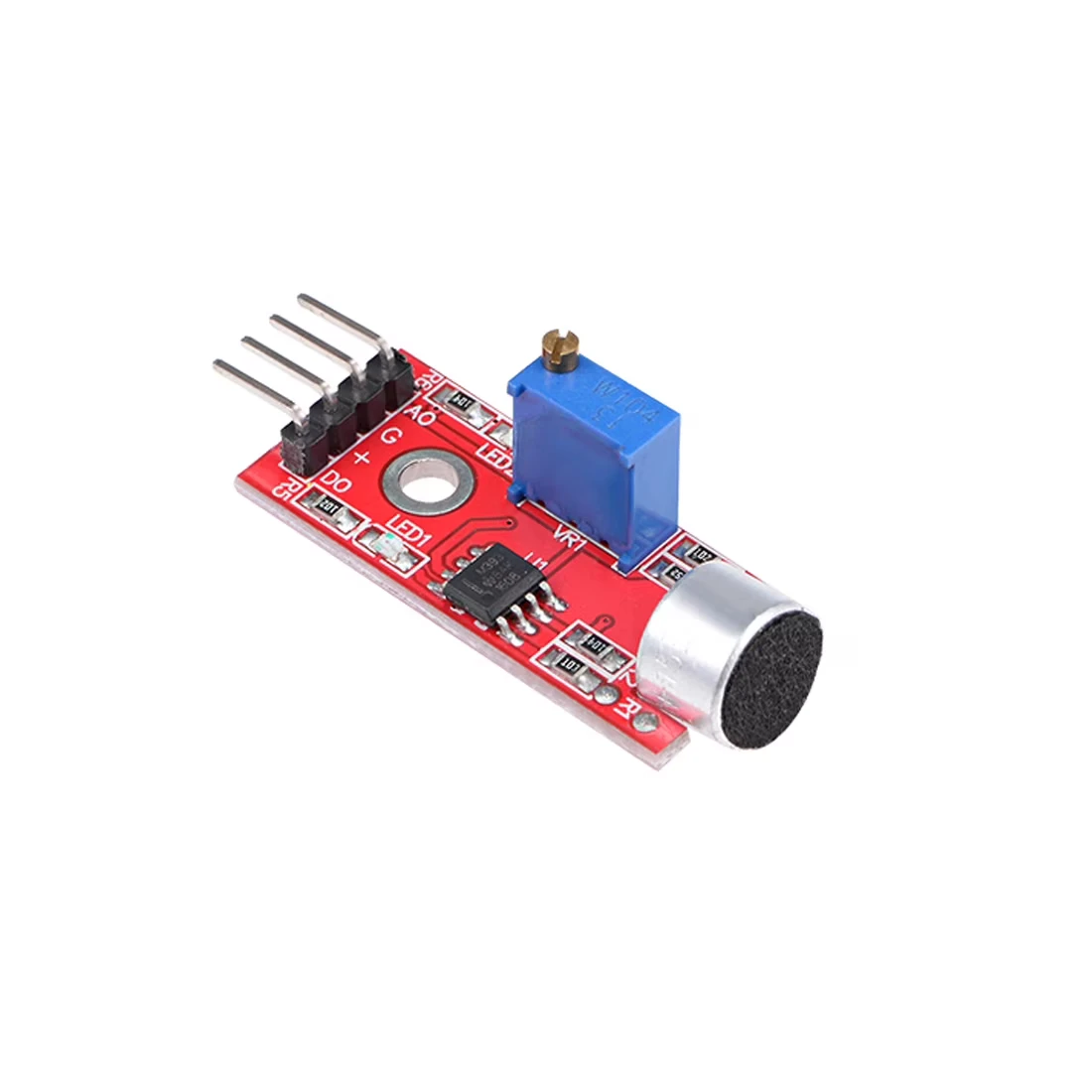
Uncertain reference image for Small microphone sound module, identity unconfirmedImage uncertain

Sensors

Small microphone sound module, identity unconfirmed

A seller-labeled microphone carrier remains unconfirmed in its size and identity.

Owned by clubQuantity: 1Identification needs review
  • Uncertain primary image: Clean owned-kit sound-module reference. It may illustrate the wrong microphone/board size for the seller small-sound slot. This is a component-class illustration; it does not resolve the 45-in-1 source slot or establish ownership.
  • 45-in-1 seller caption/visual or mechanism ambiguity remains unresolved.

Analog waveform and/or digital sound threshold

What it does

Detects changing acoustic pressure; an analog output can show a waveform while a comparator output only reports a threshold. Neither automatically provides calibrated decibels or a clean recording stream.

Useful specifications

Output/IC/bandwidth
Carrier-dependent and unverified
How it works

A typical electret capsule contains a charged diaphragm and internal transistor; diaphragm motion changes the electrical signal. Carrier biasing/amplification conditions it, and a comparator may generate logic events. The actual sensing element and amplifier are unverified for ambiguous slots.

Recognize the part

Inspect the actual metal microphone capsule and board dimensions; reused seller artwork does not distinguish the large and small slots.

Also called: Small Sound

How to use it

Identify supply, ground, analog/digital outputs and voltage swing first. Establish quiet baseline and clap response. Sample analog output fast enough for the sound of interest and subtract any DC bias; use threshold output for events, with a short event holdoff.

Know before using

Limits

  • Uncalibrated sensitivity, clipping and ambient noise.
  • Threshold changes do not specify frequency or loudness.

Common mistakes

  • Using a comparator as an audio sample.
  • Converting ADC counts to dB without a calibrated microphone path.

What you need with it

required

Source-specific schematic/datasheet or actual IC and board markings; safe signal characterization

required before electrical use

Exact interface and electrical limits must be established before a reliable controller/driver relationship can be claimed.
Related owned hardware

Read the conditions before connecting parts. A relationship can involve a driver, controller or a redesigned circuit.

preconnection verification

AstroAI digital multimeter

  • Use unpowered continuity/resistance and identified test points to characterize the source-backed class before choosing a host.

Connection conditions

  • Do not infer supply, pinout, sensing IC or driver from a similar photograph.

prototyping

830-point solderless breadboard

  • After identification, an isolated low-voltage test fixture makes pin and signal checks visible.

Connection conditions

  • A breadboard is not protection: obtain supply/pinout evidence before applying power.

Documentation

Inventory record and image evidence

Quantity: 1 · quantity confidence: uncertain

Known countable purchase/BOM contributions. Each source line is a total; do not multiply by container count or add photo observations.

Ownership: source-backed club holding. Identity confidence: uncertain.

Supported by source contribution; unresolved variant and source details remain on its holding.

Known: seller microphone slot. Probable: acoustic threshold/analog carrier. Unknown: actual size, sensing head, IC and pinout.

Source holdings

Parent kits

Original V3 image confidence: 40% · uncertain. Clean owned-kit sound-module reference. It may illustrate the wrong microphone/board size for the seller small-sound slot. This is a component-class illustration; it does not resolve the 45-in-1 source slot or establish ownership.

Original V3 image source: ELEGOO Mega reference (owned kit reference). Images describe identity and form; they do not establish quantity.

Displayed image source: User-supplied Small microphone sound module, identity unconfirmed reference photograph.

User-selected small microphone carrier reference; the existing unconfirmed identity is retained and no exact sensor model or sensitivity is inferred.

User-supplied reference image; original rights retained.