Site Guide

Find your way around the Engineering Club.

Know what you need? Search for a component, concept or project.

Around the site

Start

Labs

TestingExperimental

Build

Club

LearnExperimental

Go a little deeper

Entry points to larger collections. Use Search for individual records.

Learning paths & reference

Inside PiCrawlerExperimental

Inside Inventory

← Club inventory
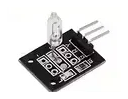
Uncertain reference image for Tilt module labeled mercury, mechanism unconfirmedImage uncertain

Sensors

Tilt module labeled mercury, mechanism unconfirmed

A seller-labeled mercury tilt module retains an unresolved switch mechanism; only tilt-contact class guidance is justified.

Owned by clubQuantity: 1Identification needs review
  • Uncertain primary image: Seller mercury caption conflicts with repeated tilt/light-cup-style imagery; useful shape reference, mechanism uncertain.
  • 45-in-1 seller caption/visual or mechanism ambiguity remains unresolved.

What it does

The seller slot suggests an orientation-triggered switch, but a ball switch and a mercury switch cannot be distinguished from the reused imagery. No chemical or mechanical identity is asserted.

Useful specifications

Mechanism/material
Unconfirmed; mercury seller wording is not proof
How it works

If it is a tilt switch, gravity moves a conductive element to change contact continuity. The element could be a ball or liquid in different designs; the actual mechanism is unknown.

Recognize the part

Small black tilt element on a carrier. Inspect markings and supplier documentation without breaking its sealed body.

Also called: Hydrargyrum-Switch

How to use it

Verify pin labels and the actual element before powering. Use a low-current continuity test only when terminals are established; determine switching orientation and debounce any contact signal.

Know before using

Limits

  • No calibrated angle or established material identity.

Common mistakes

  • Breaking the sealed element to identify it.
  • Treating the seller caption as confirmed mercury content.

Care and safety

  • Keep the element intact; if damaged, isolate it until its contents are identified.

What you need with it

required

Source-specific schematic/datasheet or actual IC and board markings; safe signal characterization

required before electrical use

Exact interface and electrical limits must be established before a reliable controller/driver relationship can be claimed.

Related owned hardware

Read the conditions before connecting parts. A relationship can involve a driver, controller or a redesigned circuit.

preconnection verification

AstroAI digital multimeter

  • Use unpowered continuity/resistance and identified test points to characterize the source-backed class before choosing a host.

Connection conditions

  • Do not infer supply, pinout, sensing IC or driver from a similar photograph.

prototyping

830-point solderless breadboard

  • After identification, an isolated low-voltage test fixture makes pin and signal checks visible.

Connection conditions

  • A breadboard is not protection: obtain supply/pinout evidence before applying power.

Documentation

Inventory record and image evidence

Quantity: 1 · quantity confidence: uncertain

Known countable purchase/BOM contributions. Each source line is a total; do not multiply by container count or add photo observations.

Ownership: source-backed club holding. Identity confidence: uncertain.

Supported by source contribution; unresolved variant and source details remain on its holding.

Known: frozen seller tilt slot. Probable: contact-switch role. Unknown: sensing mechanism/material and carrier limits. V1 review unchanged.

Source holdings

Parent kits

Original V3 image confidence: 35% · uncertain. Seller mercury caption conflicts with repeated tilt/light-cup-style imagery; useful shape reference, mechanism uncertain.

Original V3 image source: 45-in-1 seller sheet (seller reference). Images describe identity and form; they do not establish quantity.

Displayed image source: 45-in-1 seller sheet; user-approved V2 image cleanup.

User explicitly authorized integration of approved entries from the supplied V2 decisions export. Exact reviewed candidate bytes retained; original inventory identity, confidence and hardware facts remain unchanged.

Original reference image rights retained; cleanup does not change attribution or license.