Site Guide

Find your way around the Engineering Club.

Know what you need? Search for a component, concept or project.

Around the site

Start

Labs

TestingExperimental

Build

Club

LearnExperimental

Go a little deeper

Entry points to larger collections. Use Search for individual records.

Learning paths & reference

Inside PiCrawlerExperimental

Inside Inventory

← Club inventory
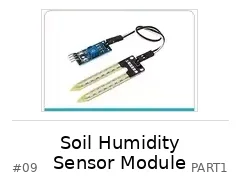
Soil moisture probe module

Sensors

Soil moisture probe module

A moisture probe estimates soil wetness through an electrical response; the exposed-fork style normally senses conductivity rather than calibrated water content.

Owned by clubQuantity: 1

Analog response or threshold; carrier-dependent

What it does

Useful for observing wet/dry trends in a particular soil. Conductivity also depends on salts, fertilizer and contact pressure, so an ADC number is not automatically percent water content.

Useful specifications

Calibration/supply/measurement range
Model-specific and unverified
How it works

For an exposed resistive fork, water and dissolved ions conduct between electrodes. A divider or conditioning board converts conductance into voltage or a threshold. Capacitive probes instead sense dielectric changes; the exact club topology should be checked before selecting a calibration model.

Recognize the part

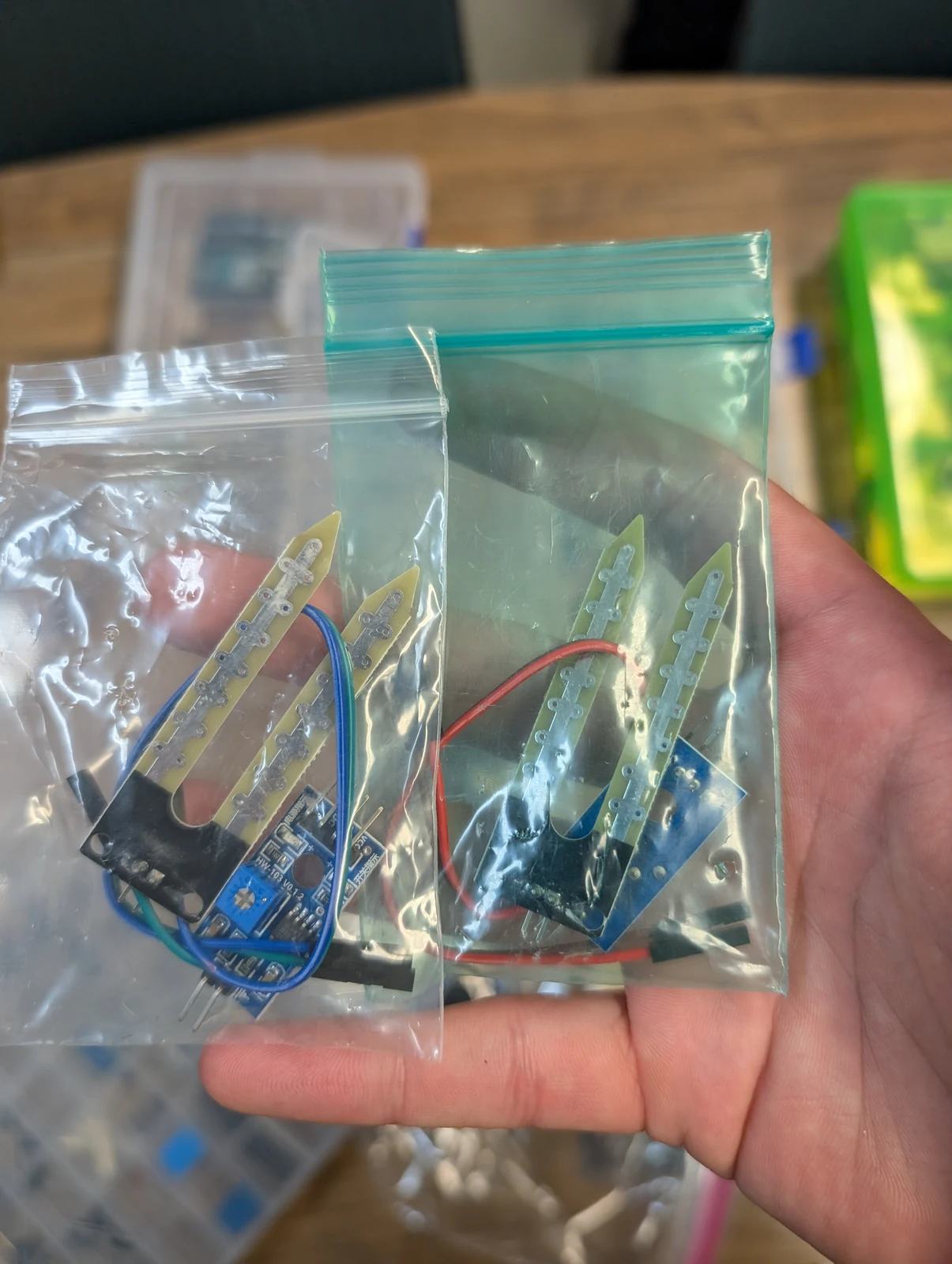
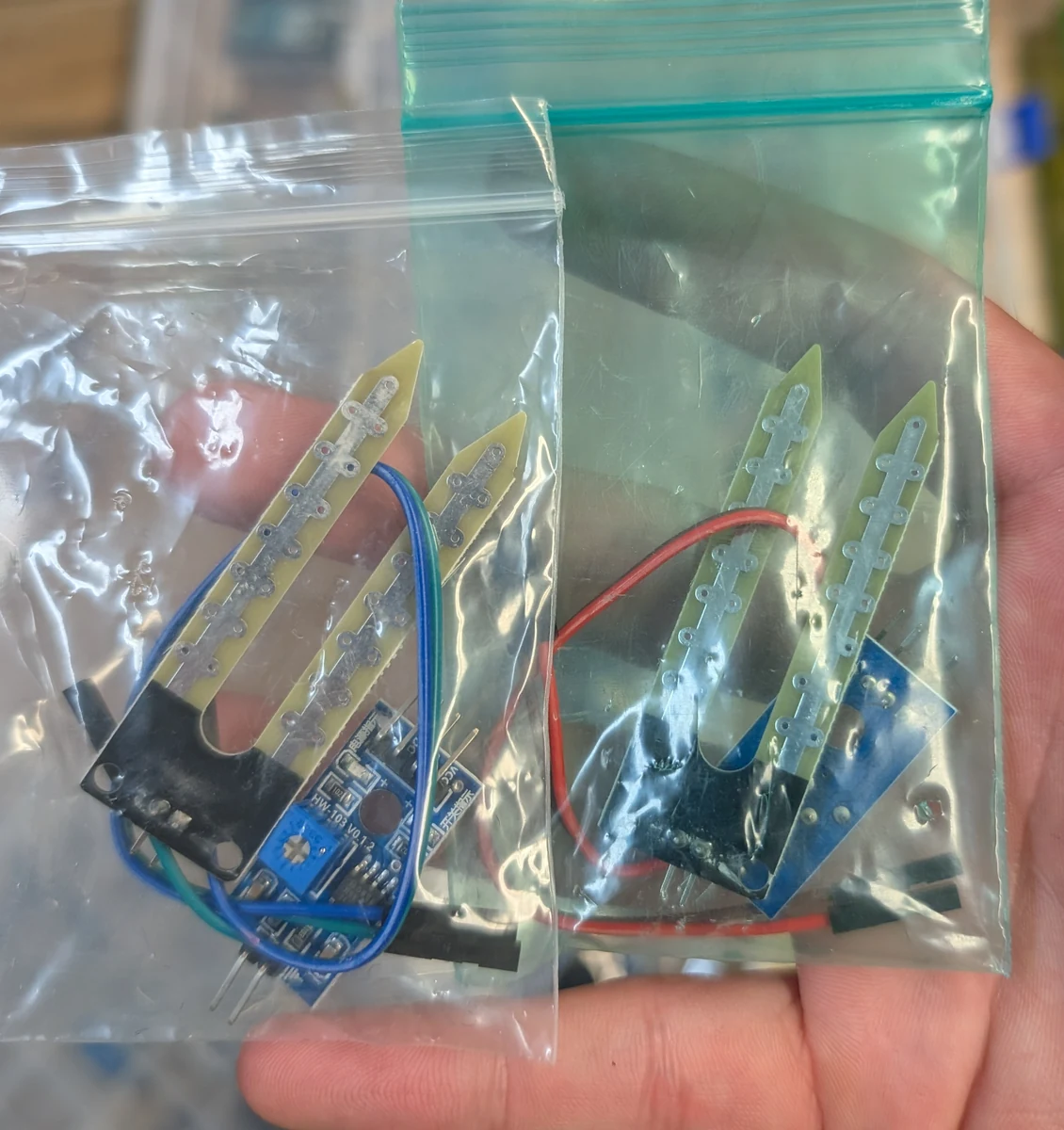
Probe/fork with sensing region and possible separate conditioning PCB. Exposed metal tracks indicate a conductive probe; a coated PCB can be capacitive.

Also called: Soil Humidity Sensor

How to use it

Verify probe type and header labels. Establish dry and wet reference readings in the same soil, insert consistently, and energize a resistive probe only while measuring when the circuit permits. Keep the connector/conditioning electronics above the wet zone.

Know before using

Limits

  • Resistive electrodes corrode; salinity strongly influences readings.
  • Calibration does not transfer reliably between soil types.

Common mistakes

  • Leaving a conductive probe continuously energized.
  • Mapping arbitrary ADC endpoints directly to volumetric percent moisture.

What you need with it

required

Arduino Uno R3

required for digital readout

An ADC-equipped controller converts the signal voltage into readings.

  • For Pi 4/5 use a separately identified ADC; their GPIO headers have no general-purpose analog input.
Owned type; verify quantity, rating and fit for this use.

What can I build?

Related owned hardware

Read the conditions before connecting parts. A relationship can involve a driver, controller or a redesigned circuit.

analog measurement

Arduino Uno R3

  • Uno ADC inputs can sample the conductivity-related wetness signal for logging or threshold decisions.
  • Soil moisture probe module gives the Uno a concrete analog-input/calibration experiment.

Connection conditions

  • Salts and electrode corrosion change readings; no volumetric moisture accuracy is established.
  • Keep the complete analog signal inside the selected ADC reference/supply range.
  • For Pi 4/5 use a separately identified ADC; their GPIO headers have no general-purpose analog input.

analog measurement

Raspberry Pi Pico

  • Pico can read the conductivity-related wetness signal with an exposed ADC and apply filtering/calibration.

Connection conditions

  • Salts and electrode corrosion change readings; no volumetric moisture accuracy is established.
  • Power or divide the signal to stay within the Pico ADC rails; its GPIO is not 5 V tolerant.

measurement

AstroAI digital multimeter

  • Measure the conductivity-related wetness signal or unpowered resistance before trusting software conversion.

Connection conditions

  • Salts and electrode corrosion change readings; no volumetric moisture accuracy is established.
  • Use voltage or resistance mode appropriately; never put a current-range meter directly across the supply.

If you outgrow it

Researched external products, separate from club inventory. Price and availability are not promised.

Adafruit

STEMMA Soil Sensor, product 4026

Not owned by club

Electrode corrosion and conductivity/salt sensitivity limit repeated conductive-probe measurements.

What improves

  • Uses capacitive sensing rather than relying on exposed conductive probe electrodes.
  • I²C readings support a repeatable experiment with less electrode-corrosion dependence.

Electrode corrosion and conductivity/salt sensitivity limit repeated conductive-probe measurements. Choose this path only when the stated improvement is a requirement.

Tradeoffs

  • Still needs calibration against actual soil/installation; it is not a certified volumetric-water-content instrument.
  • Electronics are not a waterproof submerged assembly.

Additional hardware

  • Compatible cable/host I²C and supply, protected dry electronics mounting and soil-specific calibration
Migration steps
  • Review the exact product documentation and chosen carrier before purchase.
  • Rework connections, firmware/library configuration, power and mechanics as required by this path.
  • Validate the new subsystem against the project measurement or timing requirement.

Official product / documentation ↗

Documentation

Inventory record and image evidence

Quantity: 1 · quantity confidence: probable

Known countable purchase/BOM contributions. Each source line is a total; do not multiply by container count or add photo observations.

Ownership: source-backed club holding. Identity confidence: probable.

Supported by source contribution; unresolved variant and source details remain on its holding.

V1 establishes the catalog identity. Technical references explain the named device or component class; unverified carrier-specific ratings and pinouts are not asserted.

Source holdings

Parent kits

Image confidence: 95% · high. Tight crop of the actual club item; model details not visible remain unasserted.

Image source: Engineering Club actual item (physical photo). Images describe identity and form; they do not establish quantity.