Arduino Uno R3
required for digital readout
An ADC-equipped controller converts the signal voltage into readings.
- For Pi 4/5 use a separately identified ADC; their GPIO headers have no general-purpose analog input.
Sensors
A microphone carrier converts sound pressure into an electrical signal for sound-event experiments.
Analog waveform and/or digital sound threshold
Detects changing acoustic pressure; an analog output can show a waveform while a comparator output only reports a threshold. Neither automatically provides calibrated decibels or a clean recording stream.
A typical electret capsule contains a charged diaphragm and internal transistor; diaphragm motion changes the electrical signal. Carrier biasing/amplification conditions it, and a comparator may generate logic events. The actual sensing element and amplifier are unverified for ambiguous slots.
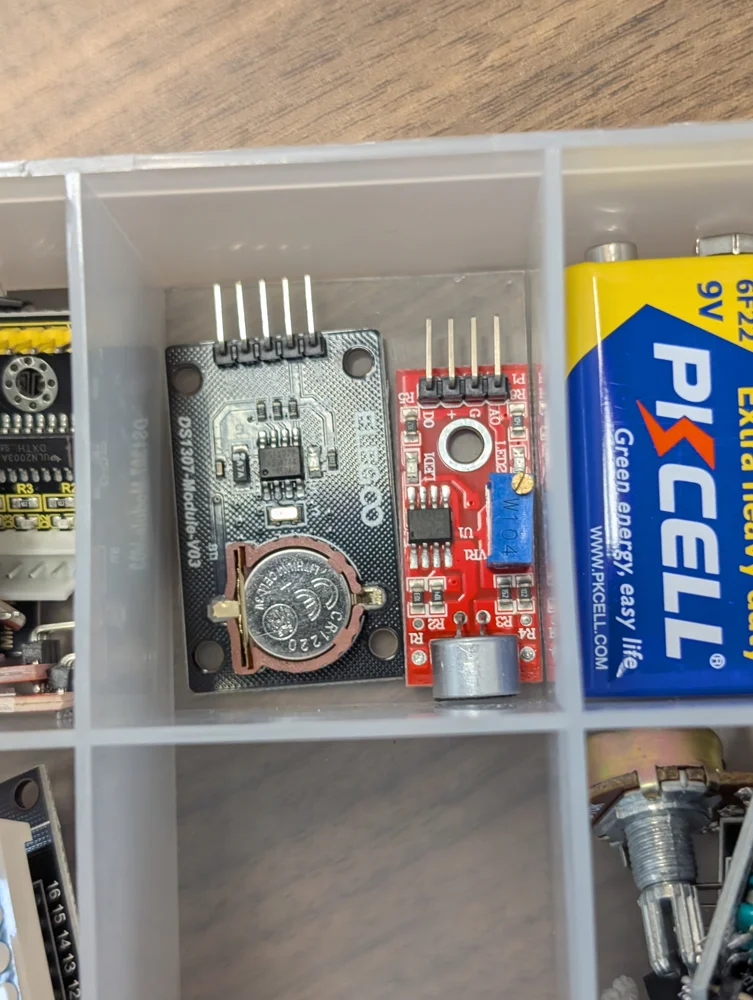
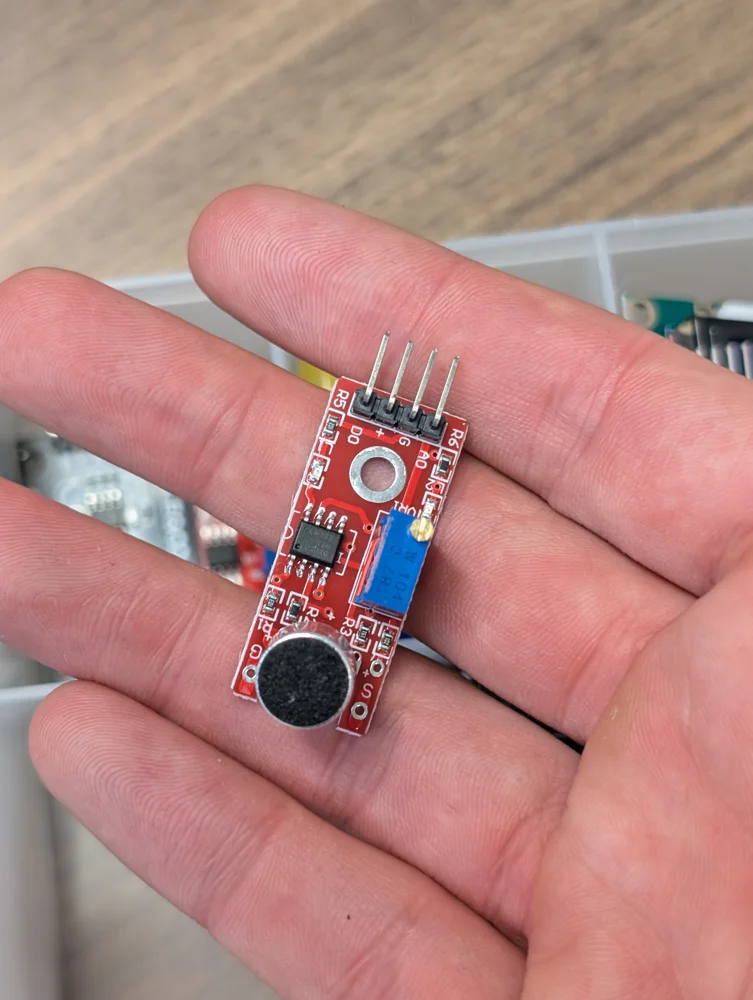
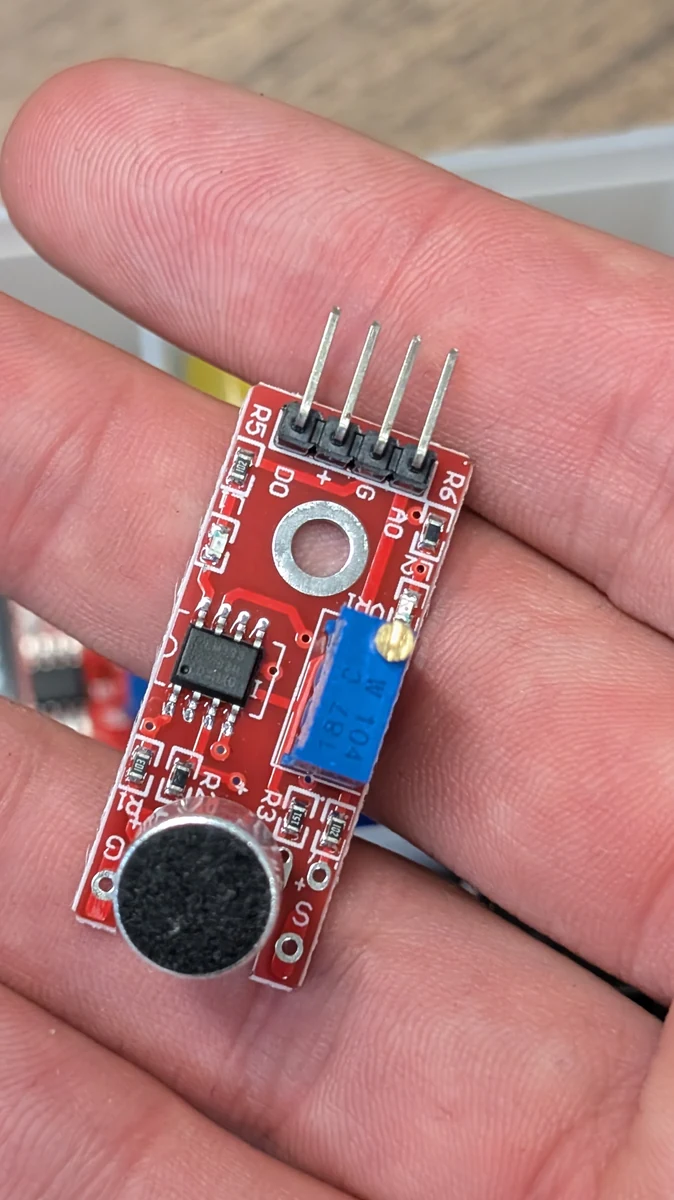
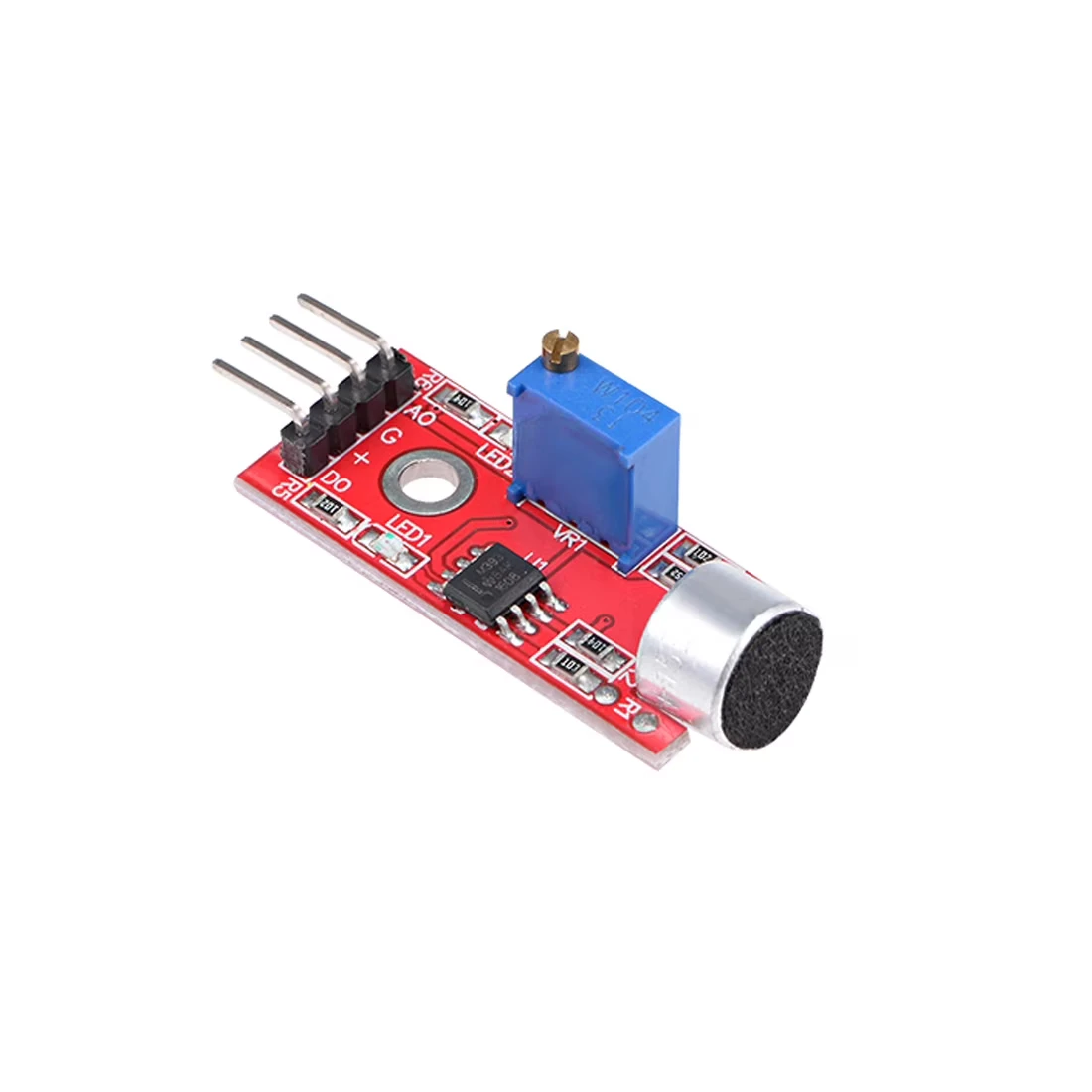
Look for a small metal microphone capsule, often a trimmer and analog/digital output labels.
Also called: Sound Sensor, sound sensor module
Identify supply, ground, analog/digital outputs and voltage swing first. Establish quiet baseline and clap response. Sample analog output fast enough for the sound of interest and subtract any DC bias; use threshold output for events, with a short event holdoff.
required for digital readout
An ADC-equipped controller converts the signal voltage into readings.
beginner
Compare threshold events with the verified microphone carrier’s analog behavior under repeatable sound conditions.
Read the conditions before connecting parts. A relationship can involve a driver, controller or a redesigned circuit.
analog measurement
analog measurement
measurement
Quantity: 2 · quantity confidence: high
Known countable purchase/BOM contributions. Each source line is a total; do not multiply by container count or add photo observations.
Ownership: source-backed club holding. Identity confidence: high.
Identity follows exact kit sheet/BOM; expected quantity is not a physical stocktake.
V1 establishes the catalog identity. Technical references explain the named device or component class; unverified carrier-specific ratings and pinouts are not asserted.
Original V3 image confidence: 90% · high. Component crop tied to an owned kit and its source mapping; selected by form rather than filename alone.
Original V3 image source: ELEGOO Mega reference (owned kit reference). Images describe identity and form; they do not establish quantity.
Displayed image source: User-supplied Sound sensor module reference photograph.
User-selected sound sensor module reference, kept distinct from the separately listed small and large microphone entries.
User-supplied reference image; original rights retained.