Arduino Uno R3
required for digital readout
An ADC-equipped controller converts the signal voltage into readings.
- For Pi 4/5 use a separately identified ADC; their GPIO headers have no general-purpose analog input.
Sensors
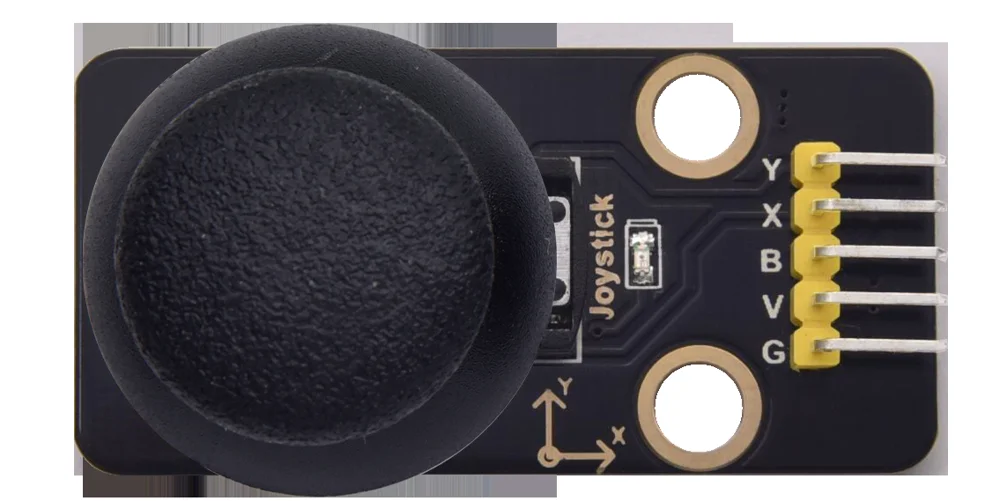
A two-axis thumb joystick converts lever position into two analog voltages and usually includes a push-down switch.
Analog X/Y; digital switch
Provides continuous manual X/Y input plus a button for a menu, robot or actuator. The two voltages represent lever displacement, not a digital direction code.
A gimbal turns two perpendicular potentiometers. Each wiper divides the supplied voltage. A spring returns the lever toward center; pressing the shaft closes a separate mechanical contact.
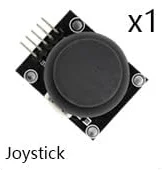
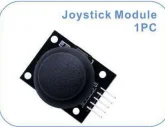
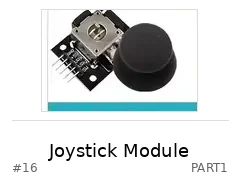
Thumb cap above a metal/plastic gimbal on a small PCB; headers commonly separate X, Y and switch signals.
Also called: Joystick Module, joystick, joystick module, Joystick
Power the potentiometers from an ADC-safe rail and read both wipers. Measure actual center and endpoints, apply a small dead zone, and debounce the push switch with a suitable pull-up. Verify pin order and which direction increases each axis.
required for digital readout
An ADC-equipped controller converts the signal voltage into readings.
beginner
Read centered axes and a push switch, then normalize a deadband-aware coordinate pair.
intermediate
Map one joystick axis to a servo target while preserving conservative travel and a neutral start.
Read the conditions before connecting parts. A relationship can involve a driver, controller or a redesigned circuit.
analog measurement
analog measurement
measurement
human motion control
analog control input
User-control strategy; absolute wipers, relative steps and two-axis commands are different semantics.
A potentiometer reports an absolute setting within its travel; an encoder reports increments that software must accumulate. A trimmer is for occasional adjustment. Choose a joystick when two independent analog axes are useful.
Quantity: 5 · quantity confidence: probable
Known countable purchase/BOM contributions. Each source line is a total; do not multiply by container count or add photo observations.
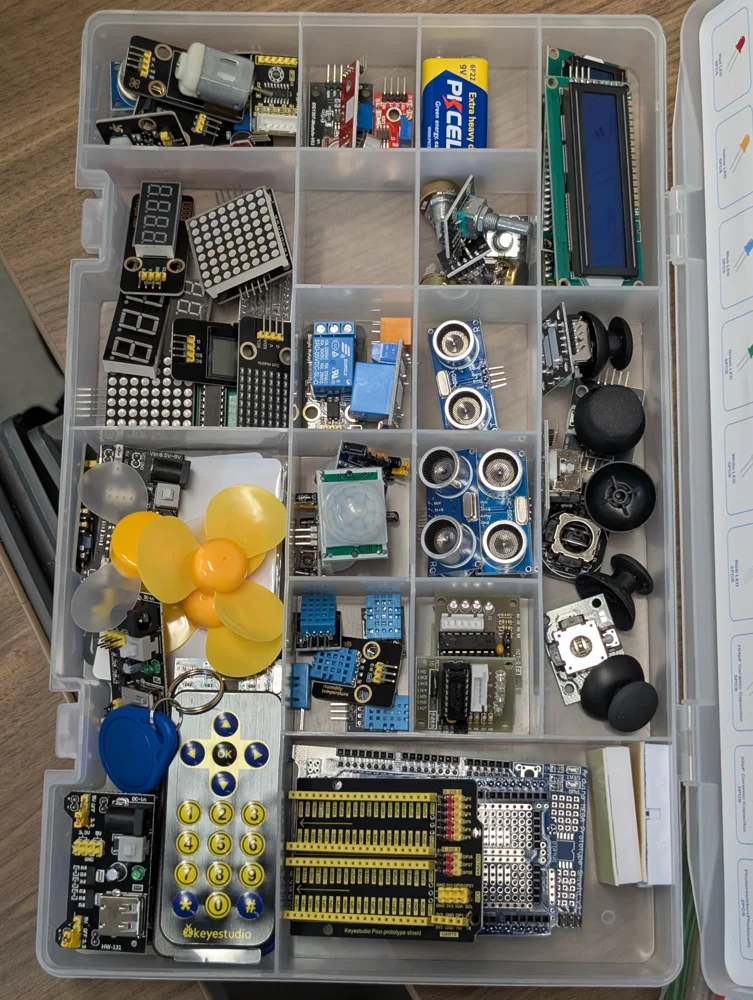
Ownership: source-backed club holding. Identity confidence: high.
Identity follows exact kit sheet/BOM; expected quantity is not a physical stocktake.
V1 establishes the catalog identity. Technical references explain the named device or component class; unverified carrier-specific ratings and pinouts are not asserted.
Image confidence: 90% · high. Component crop tied to an owned kit and its source mapping; selected by form rather than filename alone.
Image source: Keyestudio KS3020 (owned kit reference). Images describe identity and form; they do not establish quantity.